Can Can Social Media, AI and Literacy Co-Exist?t?
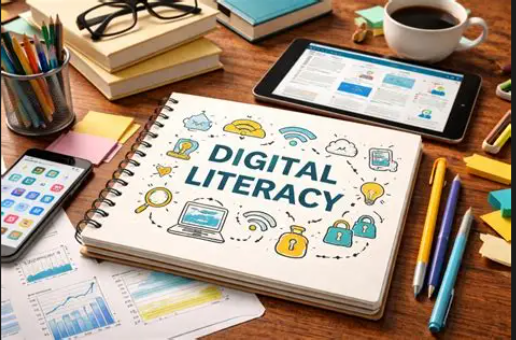
In a world where a smartphone can put millions of people within reach of a single post and artificial intelligence can generate an essay in seconds, an important question is emerging: Can social media, AI and literacy co-exist?
The answer is yes, but only if we learn how to use them responsibly.
Social media, artificial intelligence and literacy are not necessarily competing forces. In fact, when properly combined, they can create new opportunities for learning, creativity, communication and innovation. The real challenge is ensuring that technology strengthens human thinking rather than replacing it.
Social Media: More Than Entertainment
For many young people, social media is a major source of information. Platforms such as TikTok, Instagram, YouTube, Facebook and X have transformed how people discover news, learn skills, follow trends and communicate.
A student can watch a five-minute video explaining a difficult mathematics concept, learn graphic design from a creator on YouTube, or discover scholarship opportunities through a social media post.
But there is a challenge: not everything online is true.
The ability to read is no longer enough. Today's digital citizens need to question information, identify reliable sources, recognise misinformation and understand context.
This is where modern literacy becomes important.
AI Is Changing How We Learn
Artificial intelligence is rapidly becoming part of everyday life. Students can use AI tools to brainstorm ideas, explain difficult concepts, practice languages, analyze information and improve their writing.
However, AI also creates a new temptation: allowing technology to do all the thinking.
If a student simply asks AI to write an assignment and submits the response without understanding it, the technology may have completed the task, but the student may have missed the learning.
The goal should therefore not be AI instead of literacy, but AI alongside literacy.
A literate AI user should be able to ask good questions, evaluate AI-generated information, identify errors and use the technology as a learning assistant rather than a substitute for critical thinking.
Literacy Has Evolved
Literacy in the digital age goes beyond reading and writing.
It includes digital literacy, media literacy, information literacy and AI literacy.
A digitally literate student should understand how technology works and how to use digital tools safely. A media-literate student should be able to distinguish facts from opinions and recognize misleading content. An AI-literate student should understand both the possibilities and limitations of artificial intelligence.
These skills are increasingly important because the future workplace will demand people who can work with technology while still thinking independently.
The Three Can Work Together
Imagine a student researching climate change.
Social media can expose the student to different perspectives and educational content. AI can help explain complex concepts or organize research questions. Literacy skills enable the student to evaluate sources, verify claims, think critically and communicate their conclusions effectively.
None of the three has to replace the others.
Instead, they can form a powerful learning cycle:
Social media → Discover
AI → Explore & Assist
Literacy → Question, Verify & Understand
That is the balance we should be building.
The Responsibility of Schools and Parents
Young people should not simply be told to stay away from social media or AI. They need to be taught how to navigate these technologies responsibly.
Schools have an important role to play in developing students who can read deeply, think critically, communicate clearly and use technology creatively.
Parents and educators can also encourage young people to ask simple but powerful questions:
Who created this information?
What evidence supports it?
Could it be misleading?
What does AI know—and what might it get wrong?
Do I understand this, or am I simply copying it?
These questions can turn technology consumption into meaningful learning.
The Future Belongs to Critical Thinkers
Technology will continue to evolve. New social platforms will emerge. AI will become more capable. The way we communicate and learn will continue to change.
But one thing should remain constant: the ability to think.
The future does not belong to people who can simply access the most technology. It belongs to people who can use technology intelligently, creatively and responsibly.
At Schoolville, we believe technology skills must go hand in hand with critical thinking, communication and lifelong learning.
So, can social media, AI and literacy co-exist?
Absolutely.
But the goal should not simply be to create people who are good at using technology.
The goal is to build people who know how to use technology without losing the ability to think for themselves.


