Science Skills Program
Home
>Science Skills Program
Program Overview
Program Title: Schoolville Science Skills Program
Duration: 1 year (Intensive Practical Cohort)
Delivery Mode: In-Person Hands-On Lab & Digital Simulation Workshops (3 days/week, 3 hours/session; 72 total contact hours)
Program Cohorts and Sessions
Cohort Q1, 2026
Monday, Jan 5th – Friday, Mar 27th, 2026
Days: Monday, Wednesday, Friday
Morning: 9:00 AM – 12:00 PM
Afternoon: 1:00 PM – 3:00 PM
Evening: 5:00 PM – 7:00 PM
Cohort Q2, 2026
Monday, Apr 6th – Friday, Jun 26th, 2026
Days: Monday, Wednesday, Friday
Morning: 9:00 AM – 12:00 PM
Afternoon: 1:00 PM – 3:00 PM
Evening: 5:00 PM – 7:00 PM
Cohort Q3, 2026
Monday, Jul 6th – Friday, Sep 25th, 2026
Days: Monday, Wednesday, Friday
Morning: 9:00 AM – 12:00 PM
Afternoon: 1:00 PM – 3:00 PM
Evening: 5:00 PM – 7:00 PM
Cohort Q4, 2026
Friday, Oct 2nd – Friday, Dec 18th, 2026
Days: Monday, Wednesday, Friday
Morning: 9:00 AM – 12:00 PM
Afternoon: 1:00 PM – 3:00 PM
Evening: 5:00 PM – 7:00 PM
Program Description
The current secondary and early tertiary STEM education landscape presents a significant structural gap between theoretical textbook science and functional, industry-ready scientific competence. While students frequently learn complex chemical equations, physical laws, and biological pathways theoretically, many lack hands-on exposure to standard laboratory instruments, precise data collection methodology, digital sensor integration, and rigorous scientific error analysis.
The Schoolville Science Skills Program bridges this critical gap. Hosted at the Delta State Innovation Hub in Asaba, this intensive 8-week framework transitions participants from passive learners into active scientific investigators. The curriculum combines inquiry-based experimentation, quantitative data logging, digital instrumentation, environmental and biological testing, and applied engineering principles. Participants learn not only how to execute experiments, but also how to design protocols, calibrate advanced sensors, analyze real-world datasets, and articulate evidence-based solutions. The program culminates in a public Science Demo Day, where student teams defend their original research prototypes before parents, educators, and industry leaders.
Program Duration
Total Duration: 12 Months (1 Year)
Structure: 4 Levels × 3 Months (Quarterly)
Level Duration Fee
Foundation 12 Weeks ₦300,000
Practitioner 12 Weeks ₦300,000
Advanced 12 Weeks ₦300,000
Professional 12 Weeks ₦300,000
Entry Rule:
Learners must complete each level before progressing to the next.
Program Schedule
Each level follows the same structure:
Frequency: 3 Days per Week
Session Length: 3 Hours per session
2 Hours Guided Practical Training
1 Hour Unguided/Independent Practice
Delivery Options:
Onsite
Online
Hybrid
Program Objectives
Laboratory Safety & Standard Operating Procedures (SOPs): Master chemical, biological, and electrical safety standards; independently execute risk assessments; and maintain rigorous SOP protocols in all experimental environments.
Experimental Design & Scientific Inquiry: Formulate testable hypotheses, isolate independent and dependent variables, design control parameters, and conduct reproducible scientific investigations.
Quantitative Measurement, Instrumentation & Data Analysis: Operate precision laboratory equipment (vernier calipers, digital balances, multimeters, spectrophotometers), calculate uncertainty/error margins, and statistically analyze empirical data.
Applied Physical & Chemical Principles: Apply stoichiometric calculations, titration methodologies, circuit analysis, and automated sensor logging (using microcontrollers) to solve practical industrial and physical problems.
Biological & Environmental Diagnostics: Conduct micro-scale assays, master aseptic techniques, prepare microscopic samples, and execute multi-parameter environmental quality audits on local land and water systems.
Scientific Communication & Capstone Prototyping: Collaborate within multidisciplinary teams to design a functional scientific prototype or research project, author technical laboratory reports, and defend evidence-based outcomes at a scientific symposium.
Program Curriculum
Scientific Method, Lab Safety & Precision Measurement
Topics: Introduction to biosafety levels, chemical hazard symbols (GHS), personal protective equipment protocols, calibration procedures, metric conversions, and propagation of experimental error.
Practical Labs: Calibration of analog vs. digital balances; precision dimensional analysis using Vernier calipers and micrometers; error margin calculation across volumetric glassware.
Applied Chemistry & Analytical Techniques
Topics: Solution stoichiometry, molarity/normality calculations, acid-base equilibrium, Beer-Lambert Law, and qualitative vs. quantitative chemical analysis.
Practical Labs: Preparation of standard stock solutions; acid-base titration using phenolphthalein and pH probes; water hardness determination; colorimetric analysis of chemical dyes using spectrophotometers.
Applied Physics, Electronics & Sensor Systems
Topics: Fundamentals of current, voltage, and resistance (Ohm’s Law); breadboard prototyping; sensor integration (temperature, light, pressure); analog-to-digital conversion using Arduino microcontrollers.
Practical Labs: Building basic series and parallel circuits; operating digital multimeters and oscilloscopes; programming microcontrollers to automatically log real-time temperature and light variance datasets.
Applied Biology & Microbiology Essentials
Topics: Microscopy mechanics, cell morphology, principles of sterile technique, microbial growth phases, and enzyme kinetics.
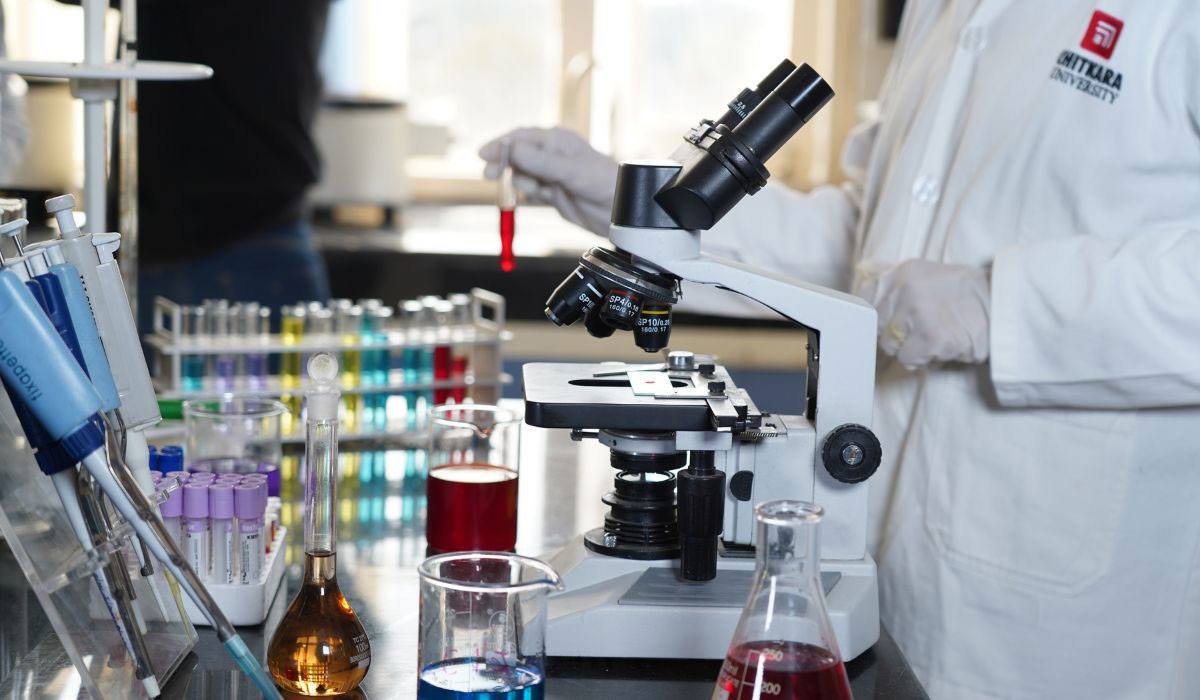
Practical Labs: Compound microscope alignment and oil immersion usage; Gram staining and wet-mount slide preparation; preparation of agar plates and microbial culturing; catalase and amylase enzyme reactivity assays.
Environmental Science & Field Sampling
Topics: Aquatic and terrestrial ecosystems, bio-indicators of pollution, water column profiling, soil macronutrient dynamics, and field sampling methodologies.
Practical Labs: Collecting field samples across designated zones in Asaba; testing water turbidity, pH, nitrate levels, and dissolved oxygen; analyzing soil sample N-P-K profiles and heavy metal indicators.
Scientific Data Science & Digital Simulation
Topics: Transitioning physical data to digital formats, statistical metrics (mean, standard deviation, confidence intervals), linear regression, trendline fitting, and virtual laboratory physics/chemistry simulations.
Practical Labs: Processing Weeks 1–5 raw data in spreadsheet software; plotting publication-grade scatter plots and error bars; running virtual molecular dynamic and orbital mechanics simulations.
Capstone Project — Research & Prototype Development
Topics: Applied research methodologies, hardware design thinking, iterative experimental debugging, team project management, and scientific ethics.
Practical Labs: Independent team laboratory work; developing, testing, and refining capstone experiments/prototypes; mandatory mentor design reviews and safety sign-offs.
Scientific Reporting & Science Demo Day
Topics: Technical report writing structure (Abstract, Introduction, Methodology, Results, Discussion), scientific poster layout design, effective oral presentation techniques, and live demonstration management.
Practical Labs: Finalizing research manuscripts and scientific posters; peer review sessions; live experimental demonstrations and oral defenses before parents, educators, and invited stakeholders at the Delta State Innovation Hub.
Assessment Methods
Assessment is continuous and project-based:
Practical assignments
Weekly tasks
Mini-projects
Capstone projects
Demo Day presentations
Peer and instructor reviews
Materials Needed
• Personal Equipment: Laptop or desktop computer (core i5 and above)
• Software Access: Licensed tools and platforms (Programming, Design, Cloud, Marketing tools)
• Study Resources: PDF course outline, video tutorials, online documentation
• Connectivity: Reliable internet for online sessions and research
Program Key Highlights

Flexibility
Participate in-person or online based on your schedule

Practical Learning
Engage in live projects with industry-standard tools

Global Certifications
Obtain certifications recognized by top organizations

Career Development
Build a professional portfolio and network with peers
Courses in the Program


Regular Programs
Specialized Programs
All rights reserved © Copyright 2013 - 2026 Schoolville